Best Functional Trainer for Home (2026): 3 Cable Picks for Small Gyms
Cable machines
The best functional trainer for most home gyms is the Inspire Fitness FTX, a compact dual-stack machine that fits a basement bay. Here are the three picks worth the floor space, and who each one fits.
Our picks
The best functional trainer for most home gyms is the Inspire Fitness FTX, a freestanding dual-stack machine that fits a basement bay. A functional trainer is the piece that makes a home gym feel complete. It adds chest flys, rows, face pulls, and triceps work that a bar and a bench cannot reach, and it does it with constant tension through the whole rep.
The catch is cost and floor space. A dedicated dual-stack machine wants a few thousand dollars and a real bay, while an all-in-one rack and cable unit fits a tighter room for much less. This guide covers the three we recommend, and where each one belongs. It sits in our cable machine guides, next to our wall-mount cable machine picks for smaller rooms.
What a functional trainer adds to a home gym
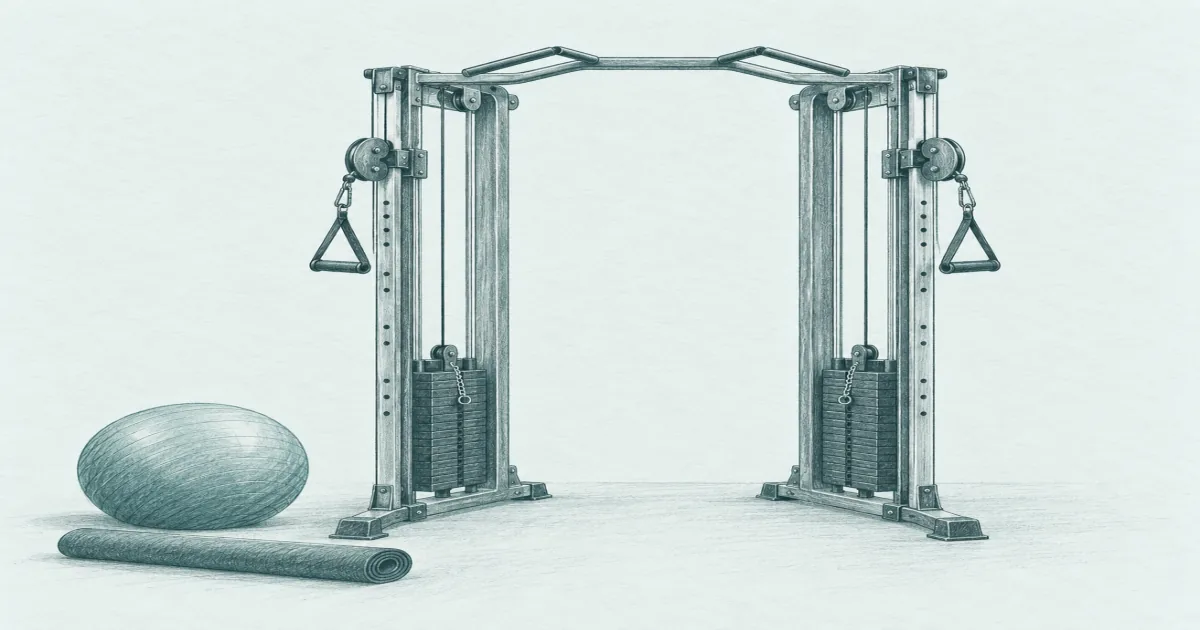
A functional trainer gives you two adjustable pulleys on a freestanding frame. Because the cables move with your body instead of along a fixed bar path, you can train at angles a barbell and dumbbell cannot reach.
That shows up in a few places. Chest flys keep tension at the top where a dumbbell goes light. Rows let you pull from a low or high angle. Face pulls and triceps pushdowns finally have a home. And two independent stacks mean you can train one side at a time or share the machine.
The trade is footprint and price. A freestanding trainer plus the room to use it can eat a whole garage bay. If that is the constraint, an all-in-one rack and cable unit gets you most of the cable work without a second machine.
The three trainers worth the floor space
Each pick below is the one we would buy in that lane. All three give you adjustable pulleys and enough cable travel for real programming.
Inspire Fitness FTX Functional Trainer: best overall
The FTX is the best dedicated functional trainer for a home. It has two independent 165 lb stacks, sliding pulleys, a pull-up bar, and a full accessory kit, all in a frame that fits a basement or a garage bay. It is the machine to buy when you already own a rack and want a real cable station.
Why it earns the top spot:
- Two independent stacks let you train both sides or a partner at once.
- Sliding pulleys give smooth travel for slow eccentrics and high reps.
- The compact freestanding frame fits low ceilings and small rooms without wall drilling.
- The included handles, ropes, and pull-up bar mean you can train from day one.
Two things to know. The 165 lb stacks run light once you get strong, so plan on a gym pin or the stack upgrade. The weight labels are sequential numbers rather than pounds, which is a small annoyance you fix with a marker.
MAJOR FITNESS F22 Power Rack: best all-in-one value
The F22 is the best value if you want one frame to do everything. It is a full power rack with a 1,600 lb frame, an independent dual-pulley system, a multi-grip pull-up bar, a landmine, and plate storage. For a garage that has room for one machine, it covers squats, presses, and cable work in one footprint.
Why it earns the all-in-one value spot:
- One frame handles squats, bench press, pull-ups, and hundreds of cable exercises.
- Independent dual pulleys let you load each side differently or train with a partner.
- The 1,600 lb steel frame and dual-triangle base stay stable without bolting down.
- Extras like the pull-up bar and landmine are included, not add-ons.
The trade is the rack geometry. Owners report the upright hole spacing can leave a J-hook or safety height slightly off from ideal, and the cable guide rods want lubing out of the box. Neither is a dealbreaker, but both are worth knowing before assembly.
GOIMU DP01 Power Cage: best budget
The DP01 is the cheapest way into a full cage and cable setup. It packs a 2,000 lb rack and a 2:1 dual-pulley trainer into about 18 square feet, with 31 cable heights and 29 rack positions. For a small garage or an apartment with a spare room, it is a lot of gym for the money.
Why it earns the budget spot:
- A full cage and a dual-pulley trainer in about 18 square feet.
- The 2:1 ratio and 31 cable heights give smooth travel for flys and curls.
- Safety arms and J-hooks adjust on 1 inch spacing for squat and bench work.
- Two independent pulley sides allow unilateral work or partner training.
The trade is the ratio. A 2:1 pulley halves the plate weight at the handle, so heavy lat pulldowns and rows need more plates than the number suggests. Some owners also swap to aluminum pulleys for a smoother glide, which is a cheap upgrade if you want it.
Functional trainer vs wall-mount cable machine
Both add cable work, but they solve different rooms.
If you have the room and want two stacks, a freestanding trainer is the better machine. If you only have a wall bay, a wall-mount cable station gets you most of the cable movements for a fraction of the floor space.
Weight stacks, pulley ratio, and footprint
Three specs decide whether a trainer fits your training and your room.
- Stack weight. Two 165 lb stacks cover most home lifting. If you train heavy on pull-downs and rows, look for a machine that accepts a pin or an upgrade, or choose an all-in-one rack that loads your own plates.
- Pulley ratio. A 2:1 ratio doubles the cable travel and halves the effective load, which feels smooth for flys and curls but means more plates for heavy pulls. A 1:1 ratio sends the full load for heavy lat work.
- Footprint and height. A freestanding trainer needs arm room in front, so plan on 12 to 18 square feet. Measure your ceiling first, since most trainers stand 80 to 85 inches and a low basement joist is the real limit.
Who should skip a functional trainer
A trainer is a great second machine and a poor first one. Skip it if any of these sound like you.
- You do not own a rack, bench, or free weights yet. Build the core of the gym first.
- You only have a wall bay. A wall-mount cable station covers the same movements in a fraction of the space.
- You train only with a barbell and are happy. You can add cable work later without losing much.
- You want the cheapest cable setup. A plate-loaded wall station or a set of bands costs far less than a dual-stack machine.
If you are still deciding on the room, our cable machine guide and weight bench picks cover the rest of the build.
Bottom line
For most home gyms, get the Inspire Fitness FTX. It is a real freestanding dual-stack trainer that fits a small room and covers every cable movement you need. If you want one frame for squats and cables, get the MAJOR FITNESS F22 and let the independent pulleys handle the rest. If you are building on a budget, the GOIMU DP01 power cage is the cheapest way into a full cable setup. Any of the three adds more usable exercises than another set of dumbbells.
Frequently Asked Questions
Is a functional trainer worth it?
Yes, if you want cable work at home and have the floor space. A functional trainer adds constant tension through the whole range of motion, which free weights cannot do, so it covers chest flys, face pulls, rows, and triceps that a bar and dumbbells handle awkwardly. It is a second purchase after a rack and bench, not a replacement for them.
How much does a functional trainer cost?
A compact home unit runs about $350 to $900 for an all-in-one rack and cable setup, and $1,500 to $2,500 for a freestanding dual-stack machine with heavier stacks. Commercial dual-stack trainers cost several thousand more. The $800 to $1,000 lane is where most home gyms get the best mix of stack weight and footprint.
Which functional trainer is better, Rogue or REP?
Both build excellent freestanding trainers, and the better one is the one whose footprint and stack weight fit your room. Rogue and REP machines want several feet of depth and a few thousand dollars, so they suit a dedicated space. A compact FTX or an all-in-one rack and cable unit fits a garage bay or a basement with an 8 foot ceiling.
What is the best multi-functional home gym equipment?
An all-in-one power rack with a dual-pulley system is the best multi-functional buy for a small gym, because one frame covers squats, bench press, pull-ups, and cable work. The MAJOR FITNESS F22 and the GOIMU DP01 both do this. A freestanding trainer like the FTX is the better pick when you already own a rack and want a dedicated cable station.
What is the difference between a functional trainer and a cable machine?
A functional trainer is a freestanding machine with two independent weight stacks and adjustable pulleys, so you can train both arms or a partner at once. A wall-mount cable station is a single frame that bolts to a stud wall and uses your own plates. We cover the wall-mount and lat-tower route in our cable machine guide.
How much space does a functional trainer need?
A compact freestanding trainer takes about 12 to 16 square feet, plus a few feet in front for arm travel. An all-in-one rack and cable unit runs about 18 square feet. Measure your ceiling too, since most trainers stand 80 to 85 inches tall and a low basement joist can be the real limit.
Can one person assemble a functional trainer?
Many owners do it alone in about four hours, but a second set of hands makes the top brackets and guide rods much easier. Lay out the hardware first, leave the cable guide rods lightly lubed, and do not fully tighten the frame until every bolt is started. Freestanding dual-stack machines are the heaviest and the slowest to build.