Best Cable Machine for Home Gym (2026): Wall-Mount and Lat Tower Picks
Cable machines
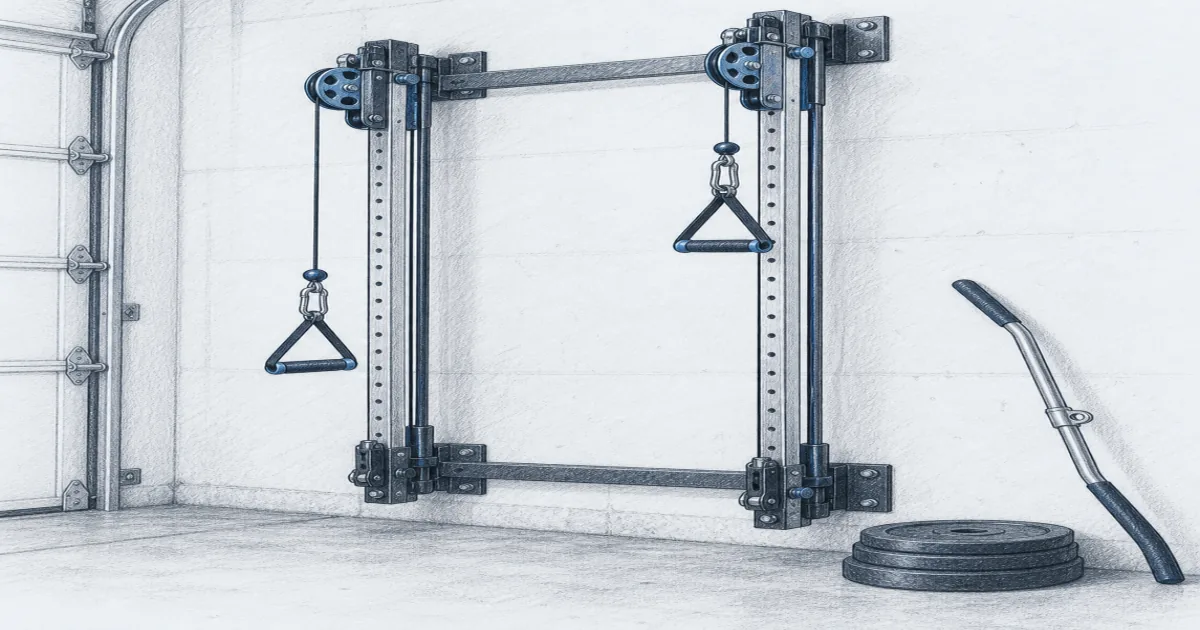
The best cable machine for most home gyms is the Goimu WM1, a wall-mounted station that adds cable work in about three square feet. Here are the three picks worth the wall, and who each one fits.
Our picks
A cable machine is the piece that turns a rack and a bench into a full gym. It adds constant tension through the whole range of motion, which is something a dumbbell or a barbell cannot do, and it makes face pulls, lateral raises, and triceps work far easier to load and control. The catch is space. A commercial cable crossover wants 15 to 25 square feet and a few thousand dollars, which is more gym than most garages are willing to give up.
The three machines below solve that in different ways. Two bolt to a wall and disappear when you are done. One stands on its own so you can skip the drill entirely. This guide sits in our cable machine guides, and if you are still building the room out, pair a cable station with a weight bench and a set of adjustable dumbbells.
What a cable machine adds to a home gym
A cable machine is not a replacement for a rack. It is the second half of one. A bar and a bench build the big lifts. A cable station fills in the work that needs a steady pull from an angle you cannot get with free weights.
Here is what that looks like in practice.
- Constant tension. A dumbbell is heaviest at one point in the rep and light at the end. A cable stays loaded through the whole arc, which is why cable flys and lateral raises feel different from their dumbbell versions.
- Cheap variety. One frame covers chest, back, shoulders, arms, and core. That is a lot of programming out of a single purchase.
- Joint-friendly loading. The cable moves with your natural path instead of forcing a fixed one, which helps if a shoulder or elbow complains on free weights.
- Small footprint. The wall-mounted units in this guide take about as much floor as a couple of yoga mats, which matters when the garage still has to fit a car.
The three cable machines worth the wall space
Each pick below is the one we would buy in that lane. We also looked at the common friction points, the kind that only show up after the machine is bolted in and loaded, because that is what decides whether a cable station gets used or gets in the way.
Goimu WM1 Wall Mount Cable Station: best overall
The WM1 is the best mix of price, footprint, and range in this category. It is a wall-mounted station that packs a lat pulldown, a seated row, a crossover, and single-arm work into about three square feet, and it does it for under $200 most weeks. For a garage that has to share space with a car, that trade is the whole point.
Why it earns the top spot:
- Wall mount into the studs keeps the frame rigid under heavy crossovers and pulldowns.
- Dual independent pulleys with a 1:1 and 2:1 ratio switch cover both heavy pulls and fast, light work.
- 17 pulley heights plus a removable anti-slip footboard let you set up rows and pulldowns on the same frame.
- The included lat bar, cable bar, tricep rope, and two D-ring handles mean you can start training without buying attachments.
The honest limit is the load. It is rated to about 300 pounds, which is plenty for cable work but not a number you will push past on most movements. It also needs a real wall. A stud bay or a concrete wall is the right home for it, and drywall alone is not enough.
Mikolo G3 Wall Mount Cable Station: best smooth pull
If the pull itself is what you care about most, the Mikolo G3 is the pick. The carriage runs on nylon-coated aircraft cables, the 19-position track clicks in a hair apart, and the frame is 14-gauge steel with a dual independent pulley system. It is the wall station we would choose for high-rep, controlled cable work and for a couple sharing a garage gym.
Why it earns the smooth-pull spot:
- Nylon-coated cables feel slicker than the bare steel on cheaper units, especially on slow reps.
- 19 height positions let you dial in an exact angle instead of the nearest one.
- Dual independent pulleys support unilateral work, so one side can move without the other.
- The detachable sleeve takes 1-inch and 2-inch plates, and the package includes a lat bar, a cable bar, and a tricep rope.
Two things to know. The base model uses plastic pulleys, which is the part to keep an eye on long term, and the carriage has a little drag before you load it. Neither shows up once you are training with weight on the pin.
GOIMU LS01 Lat Pulldown Machine: best freestanding pick
Some people cannot or will not drill into a wall. Renters, finished basements, and shared rooms all push toward a freestanding tower, and the GOIMU LS01 is the one we would buy. It stacks a high pulley, a low pulley, and an ab crunch station on a single frame, and it stands in about three square feet.
Why it earns the freestanding spot:
- No wall mounting, so it works in a rental or a room where the walls are off limits.
- Three pulley stations cover lat pulldowns, seated rows, and cable crunches on one tower.
- The padded seat adjusts to three heights, which makes it shareable in a family gym.
- A detachable weight sleeve fits 1-inch and 2-inch plates, and the frame is rated to 730 pounds.
The trade is stability. A freestanding tower relies on its base, not your wall, so on a sloped or rough slab it can rock until you shim a foot. That is a five-minute fix, not a dealbreaker, but it is the difference between a wall mount and a tower.
Wall mount vs freestanding: which one fits your room
The choice is less about brand and more about your wall and your floor. Here is the short version.
If you own the space and have a stud bay or a concrete wall, a wall mount is the better use of the room. If you rent or move often, the freestanding tower is the one you can take with you.
Pulley ratios, load ratings, and height positions
Spec-sheet shopping is where most people overthink a cable machine. Three numbers matter, and the rest is detail.
- Pulley ratio. A 2:1 ratio means half the plate weight reaches your hand, which doubles the effective range and makes light work smooth. A 1:1 ratio sends the full load, which is what you want for heavy lat pulldowns and rows. A station that switches between them, like the Goimu WM1, covers both.
- Load rating. Match it to your heaviest cable movement, not your squat. A 300-pound rating is more than most lifters will pull on a cable, but check it if you train heavy rowing or weighted pull-downs.
- Height positions. More positions means finer angles. Seventeen is plenty for most people, and 19 is a small upgrade. Below about 12, you start settling for angles that are close but not right.
One more thing to check: ceiling height. Most towers run about 80 inches, so measure the lowest joist, pipe, or open garage door before you commit.
How to set one up without wrecking a wall or a floor
- Find the studs first. A wall mount carries your pulling force, so it has to reach wood studs or concrete. Drywall anchors alone will not hold it, and a backer board is the fix when the mounting holes do not line up with the studs.
- Use long lag bolts. Go deep enough to bite the stud, not just the drywall face. This is the single connection that keeps the whole machine still.
- Get a second pair of hands for the top bracket. The frame is manageable alone, but holding the top bracket square while you mark and drive the anchors is much easier with help.
- Put something under it. A rubber tile or mat under the base protects concrete and catches the plate you set down between sets. It also does double duty if you later add a bench nearby.
- Check the bolts after the first week. Cable machines take repeated shock at the top pulley, so re-torque the frame bolts after a few sessions and then check them now and then.
Who should skip a cable machine
A cable machine is a great second purchase. It is a bad first one. Skip it if any of these sound like you.
- You do not own a rack, a bench, or free weights yet. Build the core of the gym first. A cable station is a complement, not a base.
- You only train with a barbell and you are happy with it. If your program is squats, presses, and pulls, you can add cable work later without losing much.
- Your space has no usable wall and no floor room. A wall mount needs studs, and a tower needs a footprint. If you have neither, a set of resistance bands covers the light cable movements for a fraction of the cost.
- You want a full commercial functional trainer. If you have 15 to 25 square feet and a budget in the thousands, a dual-stack trainer is the better machine. The picks here are built for small home spaces, not for a commercial floor.
Bottom line
If you want one cable machine that adds a full range of pulling, pressing, and shoulder work to a home gym, get the Goimu WM1 Wall Mount Cable Station. If the feel of the pull matters most to you and you want a 19-position track, get the Mikolo G3. If you cannot mount to a wall, get the freestanding GOIMU LS01 lat tower.
Any of the three will add more usable exercises to a small gym than a second set of dumbbells, and none of them will take the room you need for the car.
Frequently Asked Questions
Is a cable machine good for a home gym?
For most home lifters, yes. Cable work adds constant tension through the whole range of motion, which free weights cannot do, and it covers face pulls, laterals, and triceps that dumbbells handle awkwardly. A wall-mounted unit also takes about three square feet of floor, so it adds a lot of exercise range without eating a whole bay.
What is the best all-in-one cable workout machine for home gyms?
The Goimu WM1 is the best all-in-one pick for most people. One wall-mounted frame handles lat pulldowns, seated rows, cable crossovers, biceps curls, and single-arm work with the included bar, rope, and handles. If you want a freestanding all-in-one instead, the GOIMU LS01 covers lat pulldowns, low rows, and ab crunches on one tower.
What is the best cable crossover machine for home use?
A wall-mounted dual-pulley station like the Goimu WM1 or the Mikolo G3 is the best crossover for a home, because the wall does the bracing that a heavy freestanding tower needs a large base to do. Both use two independent pulleys, so you can train one arm at a time or fly both together.
What cable machines do gyms use?
Commercial gyms use selectorized cable stations with a built-in stack and a wide carriage, or big dual-stack functional trainers. Those want 15 to 25 square feet and cost a few thousand dollars. For a home, a plate-loaded wall station or a freestanding lat tower gets you most of the same movements for a fraction of the space and price.
Do I need a cable machine if I already own dumbbells?
Not if your dumbbell work already covers face pulls, lateral raises, and single-arm rows. Add a cable machine when you want constant tension, a smoother strength curve on pressing and pulling, or movements that are hard to load with free weights. It complements a dumbbell set rather than replacing it.
How much space does a home cable machine need?
A wall-mounted station needs about three to four square feet against a wall, plus room to stand back for crossovers. A freestanding lat tower takes a little more depth, closer to 12 square feet once you account for the base and the seat. Measure your ceiling too, since most towers run about 80 inches tall.
Can one person assemble a wall-mounted cable station?
The frame and pulleys go together alone, but the top bracket wants a second set of hands to hold it square while you drive the anchors. Plan on a stud finder, a level, and lag bolts long enough to reach the stud. Mount into wood studs or concrete, never drywall alone.