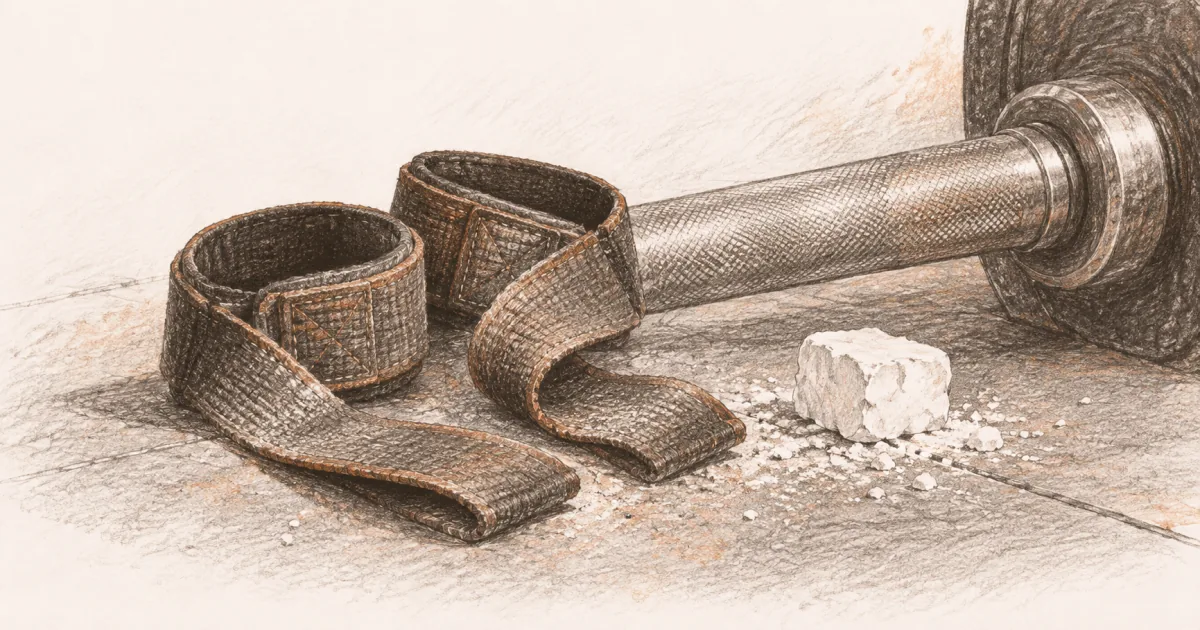
Best Lifting Straps for Deadlifts (2026): Cotton, Rubber, and Hooks
Barbells and weights
The best lifting straps for deadlifts are the Gymreapers 18 inch cotton pair at about $15, because they wrap with one twist and the neoprene pad keeps the wrist comfortable. Here are the three grip aids worth buying, and when hooks beat straps.
Our picks
The best lifting straps for deadlifts are the ones you can put on in one motion and forget about. The Gymreapers 18 inch cotton pair does that for about $15, and the neoprene pad keeps the strap from digging in on the last rep of a heavy set. If you have never used straps, start there and stop shopping.
Straps are the cheapest equipment upgrade in a home gym. They cost less than a plate and add reps to every pulling movement you already do, which matters if your grip taps out before your back does. In a garage setup they pair with a barbell and bumper plates and take up no floor space at all.
This guide sits in our barbells and weights guides, alongside the best barbell for home gym. Here are the three grip aids we would buy, and the one job each does best.
What lifting straps actually do on a deadlift
A strap moves the load off your fingers and onto your wrist. Instead of crushing the bar with four fingers and a thumb, you wrap a strip of fabric or rubber around the sleeve and let your bodyweight pin it there. Your forearm stops being the weak link in the chain.
That changes the set in two ways. The bar stops rolling in your hands, so you stop re-gripping between reps. And you can add weight without your grip deciding how many reps you get. Studies on trained lifters back up what you feel: with straps, the bar moves faster at the same load and grip fatigue shows up later.
What straps do not do is train your grip. Treat them as a tool for the heaviest sets, not a replacement for holding the bar.
Cotton, rubber, or hooks: how to choose
There are three real options, and they feel different in the hand.
Cotton straps. Two woven straps with a padded wrist section. You loop the strap around the bar, twist, and squeeze. Cheap, quiet, and they work on every bar in the room. The trade is setup: it takes a few seconds and a little practice.
Rubber grip pads. A short PVC rubber pad that sits between your palm and the sleeve. You hook it under the bar and close your hand, no wrapping. Fastest option for heavy singles, and the grip is the most secure of the three. The trade is fit, because the pad has to match your hand and bar.
Lifting hooks. A steel hook on a neoprene cuff. Your hand stays open and the hook carries the bar. Ideal for shrugs, rows, and anything high rep where closing a fist is the thing that fails first. The trade is that the bar sits a finger's width lower in your hand.
If your deadlift is the lift you care about, buy cotton first. If you chase max singles, the rubber pad is worth the extra money. If your grip gives out during back work rather than max pulls, buy the hooks.
Which grip aid fits which rep range?
Match the aid to the set you are about to do. The same lifter often owns two of the three, because a heavy single and a high-rep back-off set want different tools.
Straps usually add reps first. Pinned to the wrist, you stop re-gripping between reps, so a set that used to end at eight often reaches twelve. Add load later, once the rep count is steady and your back is doing the work.
The three grip aids worth buying
Gymreapers Padded Cotton Straps: best overall
This is the pair to buy first. It costs about the same as a box of chalk and it turns every pulling day into a heavier one. The straps are cotton with a neoprene wrist section, they come in one adjustable size, and the brand backs them with a lifetime replacement guarantee.
Why it is our top pick:
- One wrap around a standard sleeve is enough to hold a heavy pull.
- The neoprene pad protects the wrist on high-rep sets.
- It works on barbells, dumbbells, and pull-up bars.
- The price makes a second pair easy to justify for the gym bag.
The honest limit is material. Bare cotton has no rubber grip, so it can fray where it crosses an aggressive knurl, and the softer feel of the weave means you notice the bar more than you would with a rubber pad.
JerkFit Death Grips: best rubber grip for max pulls
The Death Grips are the pick when setup speed and raw security matter most. The grip is car tire grade rubber, so it grabs a bare steel sleeve or a coated one, and the bar diameter does not change how secure it feels.
Why it has the best rubber grip:
- Setup is one motion, which matters between heavy singles.
- Rubber on steel gives the most secure hold of the three options here.
- Two-sided neoprene padding keeps the wrist comfortable under a max load.
- It doubles as a pull-up grip when your forearms are already cooked.
The honest limit is sizing. Three sizes only work if you pick the right one, and the fit depends on your hand size and your bar diameter together. If you get it wrong, the pad will feel bulky rather than locked in. It is also the priciest option here at $35.95, so measure twice before you order.
DMoose Lifting Hooks: best if you hate wrapping straps
Hooks are the tool for lifters who hate the wrapping motion or whose hands hurt. Once the cuff is tight, the hook does the gripping, and you can load a bar, a dumbbell, or a pull-up bar without closing your fist around anything.
Why it is the best hook pick:
- No wrapping at all, which suits high-rep back work.
- The neoprene cuff spreads load instead of cutting into the wrist.
- The pair carries well past what most home gyms will ever pull.
- It also works for pull-ups and dumbbell rows, not just deadlifts.
The honest limit is where the hook places the bar. It sits lower in the hand than a strap or your bare grip, so the pull starts a touch further from your palm. Most lifters adapt in a session, but if you are chasing a competition single, a strap or a rubber pad is the cleaner choice.
How to wrap a strap so it holds
Most people blame the strap when the wrap fails. It is usually the wrap.
- Slide your hand through the loop so the strap hangs down the back of your wrist, pad side against skin.
- Reach under the bar and bring the loose end up and over the top of the sleeve.
- Wrap it once, toward your fingers, and pinch the tail between the bar and your palm.
- Turn your hand down and pull. The strap tightens against the sleeve on its own.
If the strap still slips, the tail is too short or you are wrapping away from your fingers. One clean wrap beats three loose ones.
Straps vs hooks: which one for deadlifts
The short version is straps for the deadlift and hooks for everything else.
Straps keep your hand position closer to a bare grip, which is why they are the default for heavy pulls. Hooks shine once a set is long enough that holding a fist is the limiting factor, which is most rowing, shrugging, and pull-up work.
Plenty of lifters end up with both, and there is a good reason for that. A $15 pair of straps and a $25 pair of hooks together cost less than one bumper plate, and between them they cover every pulling movement in the room.
How do you pick the right strap for your pull?
Match the aid to the set, not the brand. Cotton straps for a heavy deadlift, a rubber pad for near-max singles, and hooks for high-rep back work. Get the length and the wrist padding right and the rest is preference.
What length strap do you need?
Eighteen inches is the standard length and enough for one clean wrap around a normal barbell sleeve. A standard Olympic sleeve is 50 mm across, about 1.96 inches, and an 18-inch strap is cut to wrap that diameter once. A longer strap means more wraps, which takes more time and can bunch under your hand. If you train on a thick axle bar, buy a longer strap or a rubber grip pad.
When do straps beat hooks?
Straps beat hooks for a heavy deadlift, because they keep your hand position close to a bare grip. Hooks beat straps once a set is long enough that holding a fist is the limiting factor, which is most rowing, shrugging, and pull-up work. Heavy singles call for straps, high-rep back work calls for hooks.
Do straps add reps or just weight?
Both, and the reps are the bigger effect. With the bar pinned to your wrist, you stop re-gripping between reps, so a set that used to end at eight often reaches twelve. Add the load later, once the rep count is stable and your back is doing the work.
Who should skip lifting straps
- You are new to deadlifting. Learn the lift with a double overhand grip first. Straps hide a soft back position because the bar no longer rolls when your setup is wrong.
- Your grip is the goal. If you are training for a deadlift without straps, using them on every set works against that. Keep the heavy work unstrapped.
- You only train with cables and machines. Most attachments already have a handle you can hold.
- You have a wrist injury that is still healing. A strap loads the wrist directly, so get cleared before you add one.
If you are still sorting out the bar itself, start with our barbell guide, then add the grip aid. The rest of the setup, including rubber flooring so the plates survive, is worth more than any accessory.
Bottom line
For most home gyms, get the Gymreapers Padded Cotton Straps. They cost about $15, they wrap with one twist, and the neoprene pad means your wrist is not the reason a set ends.
If you pull heavy singles and want the fastest setup, get the JerkFit Death Grips and check the sizing chart first. If your grip fails during high-rep back work rather than max pulls, get the DMoose Lifting Hooks and start the cuff high on the forearm. Any of the three adds reps to the pulling work you already do.
Frequently Asked Questions
Should you use lifting straps for deadlifts?
Use them when your grip gives out before your back and legs do. If your last two reps fail because your hands open, the straps are not cheating, they are letting the target muscles finish the set. Keep your warm-up sets double overhand so your grip still gets work.
Which is better for deadlifts, straps or hooks?
Straps are the safer default. They stay quiet, they work on any bar, and they do not change where the load sits in your hand. Hooks are easier on the hands and faster to use, but the hook sits under the bar, so the pull starts slightly further from your palm. If you deadlift heavy singles, buy straps. If you do high-rep rowing and shrugging, hooks are the nicer tool.
What is the best grip for deadlifts?
Double overhand for warm-ups, then whichever of the three loaded grips feels most secure for you. Mixed grip is strongest for most people but loads one biceps and shoulder differently, hook grip is the most secure without equipment but hurts while you adapt, and straps let you pull heavy without either trade.
Do lifting straps make your grip weaker?
Not if you keep some work unstrapped. Grip improves from holding a bar that is challenging, so do your warm-ups and a final set without straps and save them for the heaviest work. Lifters who strap every set from the first warm-up are the ones who notice their hands give out on everything else.
How long should deadlift straps be?
Eighteen inches is the common length and enough for one clean wrap around a standard barbell sleeve. Longer straps mean more wraps, which takes more time and can bunch under the hand. If you train with a thick axle bar, look at a longer strap or a grip pad.
Can you use lifting straps for pull-ups and rows?
Yes. Straps work on any bar you can wrap, including pull-up bars, dumbbell handles, and cable attachments. For rows and shrugs they are the difference between stopping at fifteen reps and stopping when your back is done.
Do lifting straps damage a barbell?
Cotton is gentle on a sleeve and will not chew the knurl or the finish. What wears out is the strap. A sharp knurl can fray cotton over months of use, which is why rubber pads and hooks hold up longer on aggressive bars.
What do lifting straps cost?
A basic cotton pair runs about $15, a rubber grip pad runs about $36, and a pair of hooks is about $25. All three last years at home, and the price difference is mostly about setup speed and how the load feels in your hand.