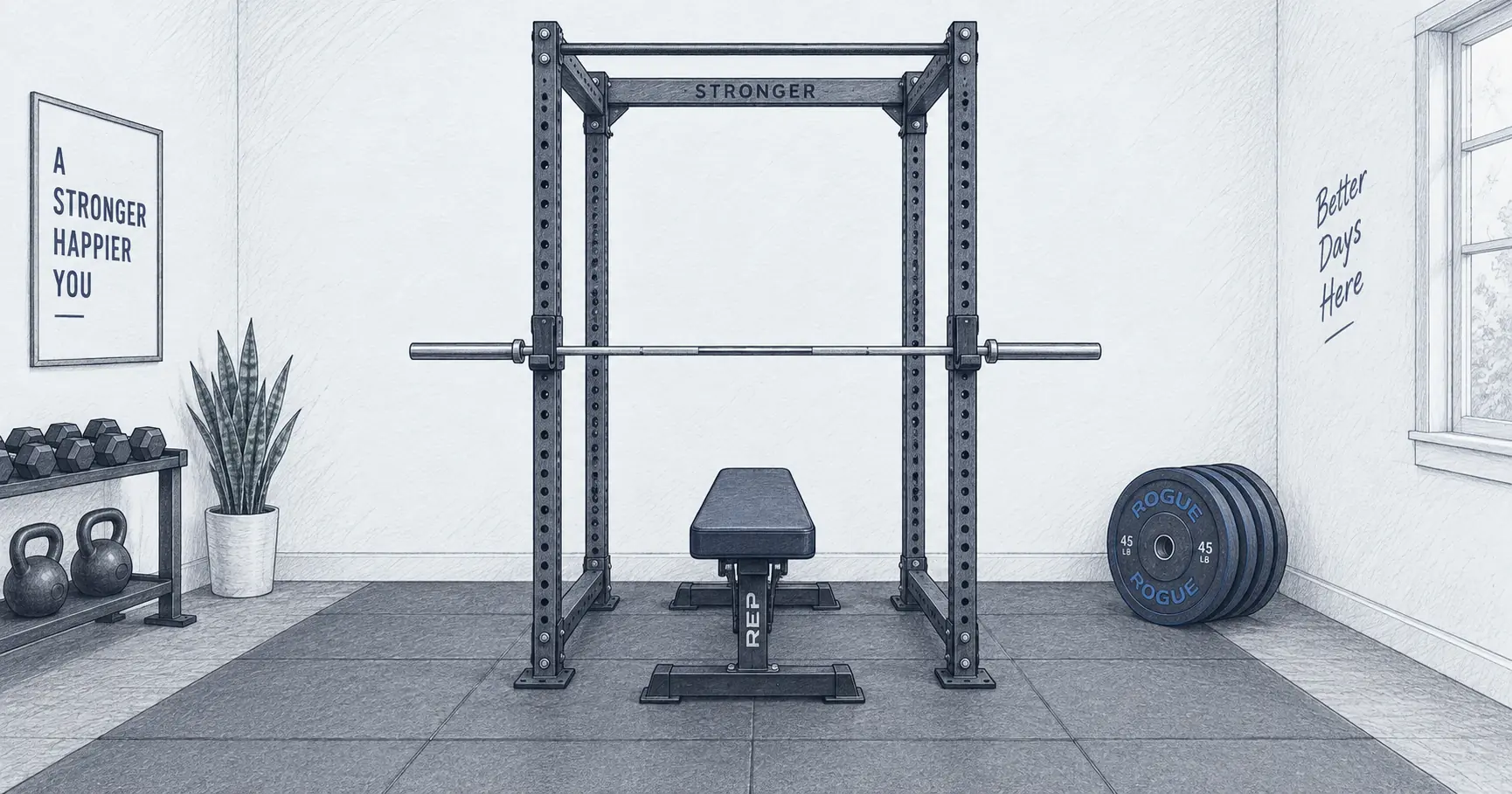
Weight Lifting Equipment for a Home Gym (2026): What to Buy First
Racks and benches
Weight lifting equipment for a home gym comes down to three pieces that cover almost every session: a power rack, an adjustable bench, and a bar. Here is what to buy first and what can wait.
Our picks
The best weight lifting equipment for a home gym is the SPORTSROYALS Power Cage, and it covers three jobs at once. It holds the bar for squats and presses, it has safety bars for lifting alone, and it adds lat pulldowns and low rows without a second machine.
This guide is part of our racks and benches guides, and it starts with the squat rack because that is the piece everything else hangs on. From there you add a barbell and weights and a weight bench, then fill in the rest.
What weight lifting equipment a home gym actually needs
Most home gyms fail because people buy in the wrong order. They start with small accessories, run out of space, and never get the piece that makes real training possible.
The core is simple. You need something to hold the bar and catch a missed rep, something to press on, and a bar with plates. Everything else is optional until those three are in place.
The rest of the list depends on your program. If you care about back size, a rack with cables saves you a second machine. If you mostly squat and press, a simpler stand is enough and costs less.
The three pieces worth buying first
Buy them in this order, because each one sets up the next:
SPORTSROYALS Power Cage, 1200 lb with Lat Pulldown: best centerpiece
The SPORTSROYALS cage does three jobs in one frame. It is a four-post power cage first, so you can squat and bench inside the frame with the safety bars set. On top of that it adds a lat pulldown and a low row from the same footprint.
What makes it the centerpiece:
- A full cage with safety bars for training alone.
- A built-in cable station for pulldowns, rows, and face pulls.
- Dip handles and a multi-grip pull-up bar included.
- Plate storage on the frame keeps weights off the floor.
You pay for it in space and setup. This is a large rack that wants a dedicated corner and a long assembly session, so it is not the pick for a tight room or an impatient first build.
HANDBODE Adjustable Weight Bench 1500: best bench
The HANDBODE 1500 is the bench half of the pair, and the 1,500 lb frame is the reason it is here. It adjusts through 21 back and seat combinations from flat to an 85 degree upright, so flat presses, incline work, and seated shoulder presses all run off one bench.
What makes it the bench pick:
- 21 positions from a 0 to 85 degree backrest and three seat angles.
- A 1,500 lb rated frame, more than most garage lifts need.
- 17.52-inch pad height matches the IPF standard.
- Wheels and a handle for moving it, and a fold for storage.
The limit is range at the bottom. There is no decline setting, and the frame is heavier than a bare-bones folder. For flat, incline, and upright work, nothing here is missing.
HANDBODE 7ft Olympic Barbell: best first bar
The HANDBODE bar is the first bar we would buy. It is a 45 lb Olympic bar rated to 1,000 lb, with a 28 mm knurled shaft, four needle bearings, and 16.3 inch sleeves that take standard 2 inch plates. At $74.99 it leaves most of a first budget for plates, which is where the money actually needs to go.
What makes it the first bar:
- A 1,000 lb rating, more than any home lifter will rack on it.
- A 28 mm shaft with dual knurl marks for repeatable hand placement.
- Four needle bearings so the sleeves spin independently on presses and cleans.
- A price of $74.99 that leaves room for plates in the same month.
The center knurl is the one thing missing. A bare 28 mm shaft is fine for high-bar squats and every press, but a heavy low-bar squat can creep, and the fix is a shirt with grip or a bar with a center knurl, which costs about $133 and drops the rating to 700 lb.
Which piece deserves the most money?
Divided by the weight each one is rated to carry, the three core pieces land in a different order than their prices suggest.
The bar is the cheapest per pound and the rack is the most expensive, and that order is what you want. The rack is the piece that catches a failed rep, so it is the one worth the extra $235 over the bar.
Which piece should you spend the most on?
The rack. It is the piece you trust with a missed rep, and it is the only one of the three that can hurt you when it fails. Spend on the cage, save on the bar, and buy plates as the budget allows.
How much does a first setup cost per year?
About $545 for the cage, bench, and bar works out to roughly $109 a year if the kit lasts five years, against $480 a year for a $40 monthly gym membership. How often you train is what decides which is cheaper.
What can wait until year two?
Plates come first, then dumbbells, flooring, and lifting straps. A cable tower, a leg press, and a Smith machine can all wait, because the rack and the bar already cover the movements those machines offer.
What to buy after the core three
Once the rack, bench, and bar are in place, add plates next. Bumper plates make sense if you drop the bar, and iron is cheaper and thinner if you do not.
After plates, the useful additions depend on your program:
- Dumbbells for accessory work and small jumps, either a fixed hex set or one adjustable pair.
- A weight tree or plate storage to keep the floor clear.
- Flooring to protect concrete under the rack and bar.
- Lifting straps for heavy pulls once grip becomes the limit.
HANDBODE Hex Dumbbell Set: best first add-on
The HANDBODE 150 lb set is the accessory purchase we would make first. It covers the range you reach for most on a garage bench, five pairs from 5 to 25 lb, and it includes a steel A-frame rack that stores them upright instead of in a pile on the floor.
What makes it the first add-on:
- Five pairs from 5 to 25 lb in one purchase, so you are not buying one pair at a time.
- Hex heads that stay put when you set them down.
- Medium knurl on chrome handles for a secure grip.
- An A-frame rack that keeps the set off the floor and out of the way.
The catch is the rack, not the dumbbells. The slots are tight on the 20s and 25s, so access is a little fiddly, and the set ships oily and needs a wipe down before the first session.
ERUZNDVK 25 lb Adjustable Dumbbell Set: best space-saving add-on
The ERUZNDVK pair is the add-on for a corner that cannot hold a rack of weights. One adjustable pair replaces five fixed pairs, and it lives on a base that keeps the plates together between sets.
What makes it the space-saving pick:
- A one-twist dial with 5, 10, 15, 20, and 25 lb settings per dumbbell.
- A dual-lock system that engages when you lift the dumbbell off the base.
- A textured non-slip handle that stays put on sweaty palms.
- A compact storage base that protects the floor and keeps the pair tidy.
The weak spot is the top end. At 25 lb per hand it covers warm-ups and moderate work, not heavy pressing, so it suits one lifter in a small space rather than a shared gym.
You do not need all of these at once. Buy the next piece when your training asks for it, not because a list said so.
What to skip until you have the basics
Some equipment is better bought later, once the core is solid.
- A smith machine. The guided bar does one job, and a free-weight rack does more.
- A leg press. It costs real floor space, and a rack plus a bar covers your legs.
- A dedicated cable tower. If your rack already has cables, this is duplicate spending.
- A pile of single-purpose gadgets. Tubes, twisters, and ab wheels are cheap, but they do not build the base.
Put the money into the rack and plates first. The accessories are easier to add when you know your lifts.
Should you buy a rack or a barbell first?
Buy the rack first if you train alone, because the safety bars let you bench and squat without a spotter. A cheap bar under a good rack is safer than the reverse. The bar and plates follow as soon as your budget allows.
The order matters because the rack is the piece you trust with a missed rep. Set the safeties just below your working depth and they catch a failed lift instead of your chest. Once the rack is in place, a bar, a bench, and a pair of plates turn it into a full program. If you are buying one piece a month, this is the sequence to follow.
Bottom line
For most home gyms, start with the SPORTSROYALS Power Cage. It gives you a rack, safety bars, and cable pulling in one footprint. Pair it with the HANDBODE Adjustable Weight Bench and the HANDBODE 7ft Olympic Barbell, and you have enough equipment to train every major lift.
Measure your corner and your ceiling before you order, then add plates and, when accessory work calls for it, dumbbells. If you have room for a rack of weights, the HANDBODE Hex Dumbbell Set is the fuller choice; if you are tight on space, the ERUZNDVK 25 lb Adjustable Set does the same job on one base. Our guide to dumbbell sets compares the fixed options.
Frequently Asked Questions
What weight lifting equipment do I need for a home gym?
Start with three pieces: a power rack or squat rack, an adjustable bench, and a 7 foot Olympic barbell. That kit covers squats, bench press, overhead press, rows, and deadlifts, which is the bulk of most strength programs. Plates come next, and cardio or cable accessories come after that.
Should I buy a rack or a barbell first?
Buy the rack first if you train alone, because the safety bars matter more than anything else. A rack lets you bench and squat without a spotter. The bar and plates follow as soon as your budget allows, and a cheap bar under a good rack is safer than the reverse.
What is the best equipment for weight lifting at home?
For most home gyms, a full power cage with built-in cables is the best single buy, because it covers pressing, squatting, and pulling in one footprint. If your space is tight, a two-post squat stand does the same core job in less room. The bench and bar matter just as much for what you can actually train.
How much space does home weight lifting equipment need?
Plan on a rectangle about 6 feet wide and 6 feet deep for a power cage, plus a few feet around it to load plates and move a bench. An 8 foot ceiling fits most cages, but pull-ups on a tall cage want closer to 8.5 feet. Measure the ceiling before you order, not after.
Is it cheaper to build a home gym than to keep a membership?
Over a few years, yes. A rack, bench, and bar cost about what two years of a mid-range gym membership costs, and the equipment lasts far longer. If you only train once a week or prefer classes, a membership still makes more sense. Frequency is what decides the math.
What weight lifting equipment should beginners skip?
Skip a smith machine, a leg press, and a dedicated cable tower until the core three are in place. They each do one job well, but they cost floor space and money that a rack, bench, and bar use better at the start. Add them later if your program calls for them.
Can I lift alone at home safely?
Yes, if you use a rack with safety bars set just below your working depth. The catches take a failed rep instead of your chest or your neck. Bench press inside the rack, keep the clips on the bar, and set the safeties every session rather than trusting memory.
How much should I spend on a first home gym setup?
A workable first setup lands close to $545 for a cage, bench, and bar before plates, which is about $310 for the cage, $160 for the bench, and $75 for the bar. You can spend less with a squat stand and a flat bench, and more on a commercial-grade rack. Spend the most on the rack, because it is the piece you trust with a missed rep.