Best Horse Stall Mats for a Home Gym (2026): 3 Rubber Floors That Last
Flooring and accessories
The best horse stall mats for a home gym are 3/4 inch rubber, and the American Floor Mats 4x6 is the one we would buy. Here are the three floors worth laying, and how to handle the weight and the smell.
Our picks
The best horse stall mats for a home gym are the American Floor Mats 3/4 inch 4x6, and the thickness is the whole reason. At three quarters of an inch, the rubber spreads the impact of a dropped deadlift and keeps the concrete underneath from cracking.
This guide is part of our flooring and accessories guides, and it starts from the home gym flooring basics. Stall mats are the cheap, heavy option that most garage gyms end up with, and once you have them under a rack and a set of bumper plates, the room finally sounds right when you train.
Why stall mats are the default home gym floor
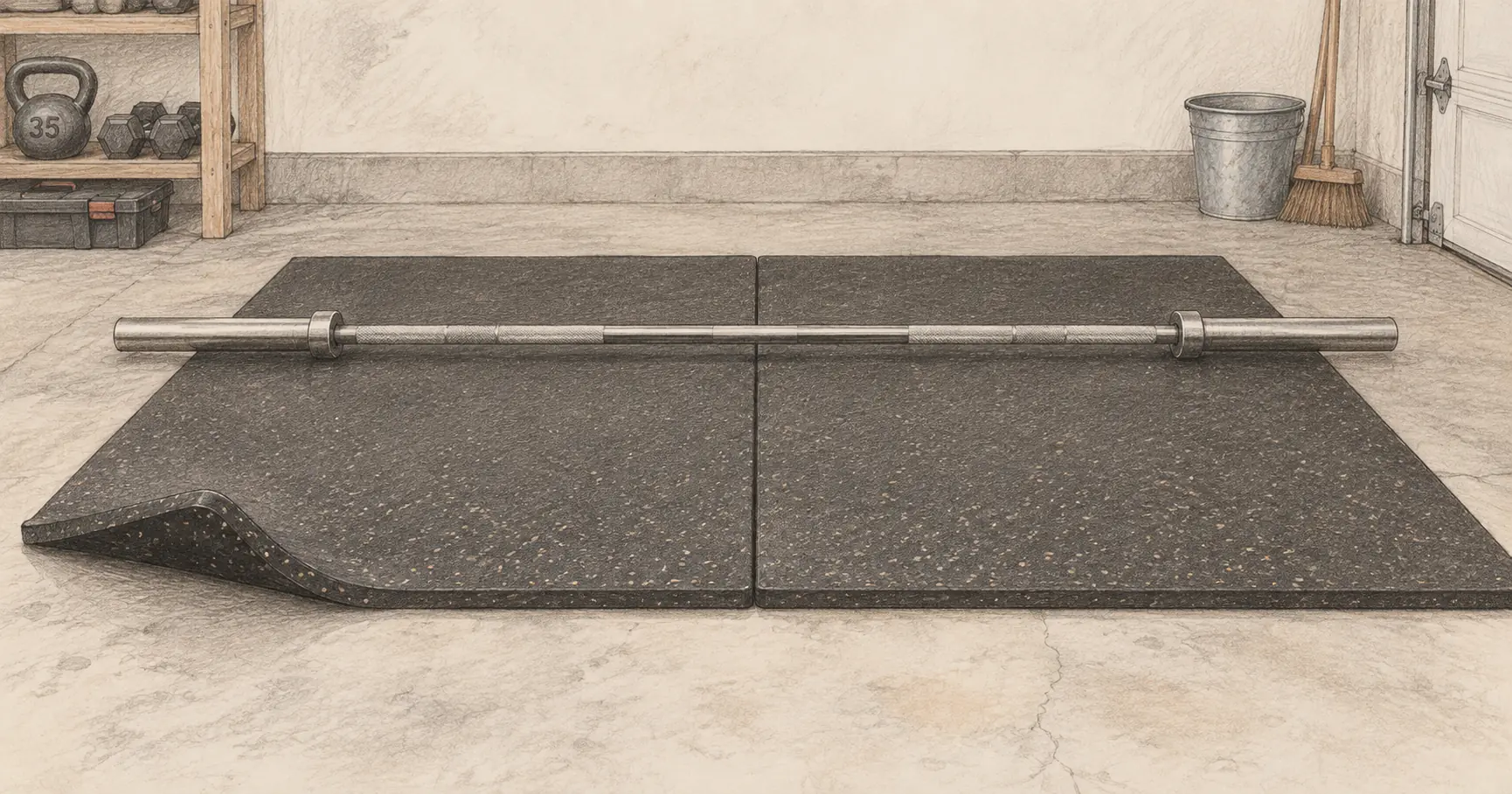
A horse stall mat is a slab of dense vulcanized rubber, usually 4 feet by 6 feet, sold for barn floors. Home gyms borrow them because they are cheap per square foot, they are tough, and they do not care about dropped weight.
What they do well is mute the floor. A dropped barbell lands with a thud instead of a crack, dumbbells stop ringing on concrete, and a dropped kettlebell does not chip the slab. They are also easy to spot clean.
What they are not is pretty or light. A 3/4 inch 4x6 mat weighs close to 100 pounds, so moving one is a two-person job. They often smell new for the first one to two weeks, and the seams between mats catch chalk and dust. For a garage gym, that trade is easy. For a finished room, look at tiles or rolled rubber instead.
How many mats do you need?
Measure the training area in square feet, not the whole garage. A single 4x6 mat covers 24 square feet, so two mats floor a 48 square foot rack-and-bench corner with one seam down the middle. A whole room takes the 6x6 tile set, which covers 36 square feet in nine 2 by 2 tiles.
A garage does not need wall-to-wall rubber. Most two-car garages run 400 to 600 square feet, but the bar only lands in one strip. Mark the rack, the bench, and the platform zone with tape, then count mats.
The stall mat we recommend
American Floor Mats 3/4 inch 4x6: the mat to buy
The American Floor Mats 3/4 inch 4x6 is the mat we put under a power rack when the budget is real but the lifting is serious. It is a solid sheet of recycled rubber with no foam layer and no backing to peel, and it holds its flat shape once it is down.
Why this is the top pick:
- Three quarter inch rubber for dropped bars and heavy dumbbells.
- A 4x6 sheet covers 24 square feet, enough for a rack and a bench.
- Vulcanized rubber that resists tearing and curling.
- Easy to sweep and wipe after a session.
The trade is handling. This mat is heavy and stiff, so bring help, and give it a few days in the sun before it comes inside.
Two other ways to floor the same space
Not every setup needs a thick 4x6 mat. Here are the alternatives we recommend.
IncStores 4x6: the value mat
The IncStores 4x6 is the mat for the lighter half of a home gym. It protects the concrete under a bench, a bike, or a rack, and at about $177 for 24 square feet it costs about $2.34 less per square foot than the 3/4 inch sheet.
Why this is the value pick:
- A lower price for the same 24 square foot coverage.
- Lighter weight that one person can move.
- Odor-resistant rubber that lays flat.
- Enough grip for machines and dumbbells.
The trade is thickness. It is not the mat for repeated dropped barbell reps, so keep those on a thicker sheet.
American Floor Mats 6x6 tile set: the whole-room floor
The American Floor Mats 6x6 tile set covers 36 square feet in nine interlocking pieces. That makes it the pick when you want the whole training area floored, not just the spot under the bar.
Why this is the room pick:
- Tiles fit around rack posts and doorways with fewer cuts.
- The same 3/4 inch rubber underfoot.
- Easier to carry and place than large sheets.
- Covers 36 square feet in one order.
The trade is cost per square foot, which runs a cent higher than the plain sheet but in a shape that fits a finished room.
How thick should a home gym mat be?
What thickness stall mat do I need?
Go 3/4 inch if you drop a barbell. That thickness spreads the impact of a dropped deadlift and protects the concrete without a platform underneath. A 1/2 inch mat is fine for benches, dumbbells, and cardio machines, and anything thinner is for foot traffic and light gear only.
Do stall mats smell, and for how long?
New rubber off-gasses for the first one to two weeks. Air them outside in the sun, wash them with dish soap and water, then let them dry before they come inside. A garage with airflow rarely notices it after that, while a basement or a bedroom needs more airing out.
How do you keep the seams out of the bar path?
Overlap or tape the edges, and keep the seams out from under the bar path so the plates do not catch a lip. Rotate the mats so the factory edges face the traffic, and walk the edges to flatten any raised lip before the first heavy set.
How to lay stall mats without fighting them
The mats are heavy, so work with them instead of against them.
- Let them relax first. Unroll or lay them flat in the sun so they warm up and flatten.
- Start from a corner. Set the first mat tight into a wall corner, then work outward.
- Use a mat gripper. A pair of mat grippers saves your hands and back when lifting an edge.
- Trim with the grain. Score along a straightedge, bend the mat, and cut in passes. Warm rubber cuts in fewer passes than cold rubber.
- Check the seams. Walk the edges and flatten any lip that could catch a plate.
Do this once and the floor lasts years.
Who should choose something else
Stall mats are not the right floor for every room.
- A finished room or bedroom. Rolled rubber or foam tiles look better and come in colors.
- A wall-to-wall floor with no seams. Rolled rubber covers more area with fewer joints.
- A very tight budget under a bench only. A single 4x6 value mat is enough.
- An apartment with strict flooring rules. Check the lease before laying heavy rubber.
If you want a softer surface for floor work, a thin foam mat on top of the rubber works for stretching and core days.
Bottom line
For most garage gyms, buy the American Floor Mats 3/4 inch 4x6. It takes a dropped bar, it holds its shape, and it covers a rack and a bench in one 24 square foot sheet.
If you only need protection under a bench or a machine, the IncStores 4x6 saves about $2.34 per square foot. If you are flooring a whole room, the American Floor Mats 6x6 tile set covers 36 square feet in nine tiles. Lay them warm, keep the seams out of the bar path, and air them out before they come inside.
Frequently Asked Questions
Are horse stall mats good for a home gym?
Yes, they are the most common floor for a garage gym, and for good reason. They are dense rubber, they take a dropped bar, and they cost far less than specialty gym flooring. Look for 3/4 inch thickness for free weights, and use a thinner mat under machines or a treadmill.
What thickness stall mat should I buy?
Buy 3/4 inch if you drop a barbell. That thickness spreads the impact on a dropped deadlift and protects the concrete without a platform underneath. A 1/2 inch mat is fine for benches, dumbbells, and cardio machines. Thinner than 1/2 inch is for foot traffic and light gear only.
How much does a 4x6 stall mat weigh?
A 3/4 inch 4x6 rubber mat usually weighs close to 95 to 100 pounds, and a 1/2 inch mat is lighter. That weight is the point, since it stays put under a dropped bar, but it also means moving and cutting one is a two-person job. Buy a mat gripper tool or recruit a helper.
Do stall mats smell?
New rubber mats often smell for the first week or two. Air them outside in the sun, wash them with dish soap and water, then let them dry before they come inside. A garage with airflow rarely notices it after that. A basement or bedroom needs more airing out.
How do I cut a stall mat to fit a corner?
Score the rubber with a utility knife along a straightedge, then bend the mat back and keep cutting in passes. Warm rubber cuts more easily than cold rubber, so leave the mat in the sun first. A fresh blade matters more than pressure.
Can I put stall mats over carpet?
It is possible but not ideal. Carpet lets the mat flex and keeps moisture underneath, which can smell over time. Stall mats work best on a hard, flat surface like concrete or a garage slab. If carpet is the only option, use a thinner mat and check underneath it now and then.
Do I need a platform under stall mats for deadlifts?
For most home lifters, no. A 3/4 inch mat on concrete handles a controlled deadlift without a platform. If you drop from the top or snatch heavy, build a plywood platform and add mats on the sides for the bar to land on. The mats still protect the floor either way.
How many mats do I need for a garage gym?
Measure the area you train on rather than the whole garage. Two 4x6 mats cover a rack and a bench, which is enough for most home setups. For a full room, the 6x6 tile set gives you 36 square feet with fewer seams than piecing together mats.