Barbell Plate Calculator
Enter your target weight and bar weight to see which plates go on each side.
| Target | Per side | Plates per side |
|---|---|---|
| 95 lb | 25.0 lb | 1x25 |
| 135 lb | 45.0 lb | 1x45 |
| 185 lb | 70.0 lb | 1x45 + 1x25 |
| 225 lb | 90.0 lb | 2x45 |
| 275 lb | 115.0 lb | 2x45 + 1x25 |
| 315 lb | 135.0 lb | 3x45 |
| 405 lb | 180.0 lb | 4x45 |
Subtract the bar first
The bar weight counts toward your total, so take it off before you do any plate math. A 45-pound bar means a 225-pound target leaves 180 pounds for plates, or 90 per side.
Load the biggest plates first
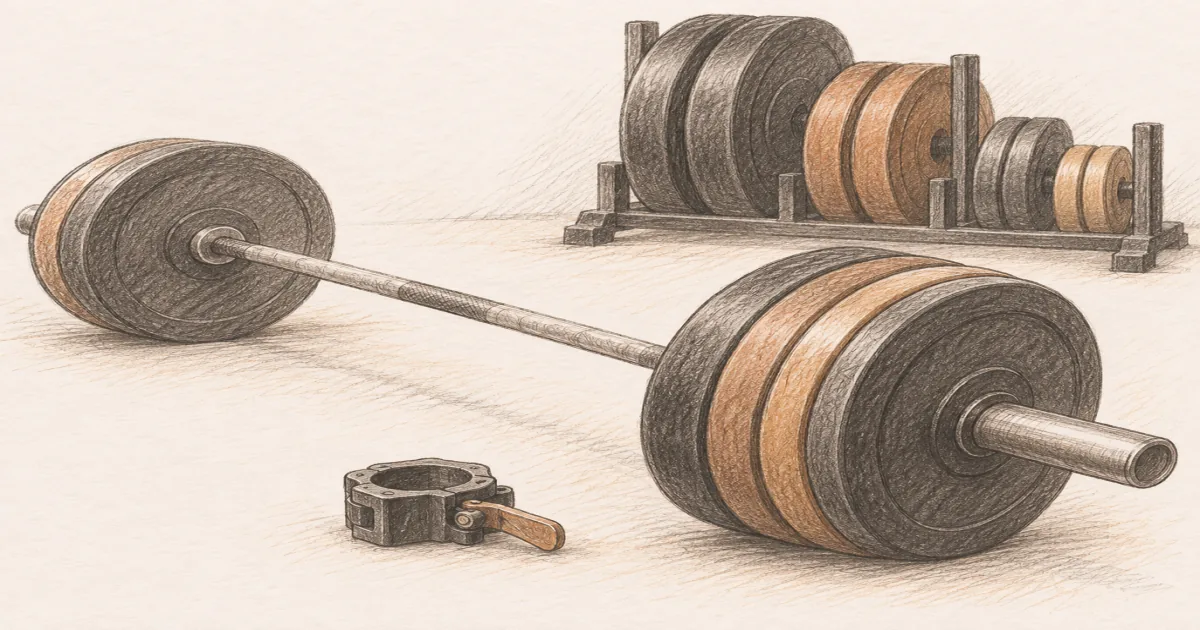
Put the heaviest plates closest to the collar and work outward to the smallest. This keeps the bar balanced, makes plate changes faster, and stays within competition convention.
Matching plates to your gym
This calculator uses standard pound plates: 45, 35, 25, 10, 5, and 2.5. Some sets skip the 35 or use kilogram plates, so check your plates. Bumper plates and iron load the same way.
Our picks
Questions about this calculator
How much weight is on each side of a 225 lb bar?
With a 45-pound bar, 225 pounds means 90 per side, which is a 45 and a 25 on each end.
How do I load 135 pounds?
Subtract the 45-pound bar to get 90, then split it into 45 per side, so one 45-pound plate on each end.
Where do the heaviest plates go?
Load the biggest plates closest to the collar and smaller plates outward. That keeps the bar balanced and plate changes quick.
What plates does this calculator use?
It uses standard pound plates: 45, 35, 25, 10, 5, and 2.5. Adjust if your set skips a size or uses kilograms.
How much does an Olympic bar weigh?
A standard men's Olympic bar weighs 45 pounds, or 20 kilograms. A women's bar is 35 pounds, or 15 kilograms.
Can I load a bar unevenly?
Only for small jumps, and even then keep the difference under a plate. Balanced loading protects the bar and keeps the lift safe.