Best Rowing Machine for Home (2026): The Concept2 and the Quiet Apartment Pick
Cardio machines
The best rowing machine for home is the Concept2 RowErg, an air rower that turns every stroke into comparable data and holds up for years of training. For apartments and casual cardio, the Merach Q1S is the quiet pick.
Our picks
A rowing machine earns its floor space when you actually use it, and that comes down to two things: how it feels to pull and how easy it is to keep in the room. The Concept2 RowErg wins on feel and data. The Merach Q1S wins on noise and price. Most home buyers are choosing between those two lanes, not between ten brands.
This is the rower guide in our cardio machine guides. If you are building a full home gym, pair a rower with a weight bench and a set of adjustable dumbbells so your cardio and strength work share the same room.
Air vs magnetic: what changes about the workout
Rowing machines differ most in how they create resistance, and that single choice decides how loud the machine is, how hard the stroke can get, and how much it costs.
- Air resistance. A fan flywheel spins against the air. The harder you pull, the harder the next stroke feels, which is why rowers call it the most natural of the four. It is also the loudest.
- Magnetic resistance. Magnets resist a spinning metal flywheel. It is smooth and very quiet, but the resistance is fixed at whatever level you dial in, so it does not surge when you pull harder.
- Water resistance. Paddles churn a tank of water. It sounds and feels great, and it is heavy and expensive, which puts it out of reach for most small home setups.
- Hydraulic resistance. Pistons do the work. It is cheap, but the stroke is short and choppy, and most rowers outgrow it fast.
For a home gym, the real choice is air or magnetic. Air gives you a training tool. Magnetic gives you quiet cardio that fits a shared space. Everything else is detail.
Concept2 RowErg vs Merach Q1S: the two real lanes
Concept2 RowErg: the training standard
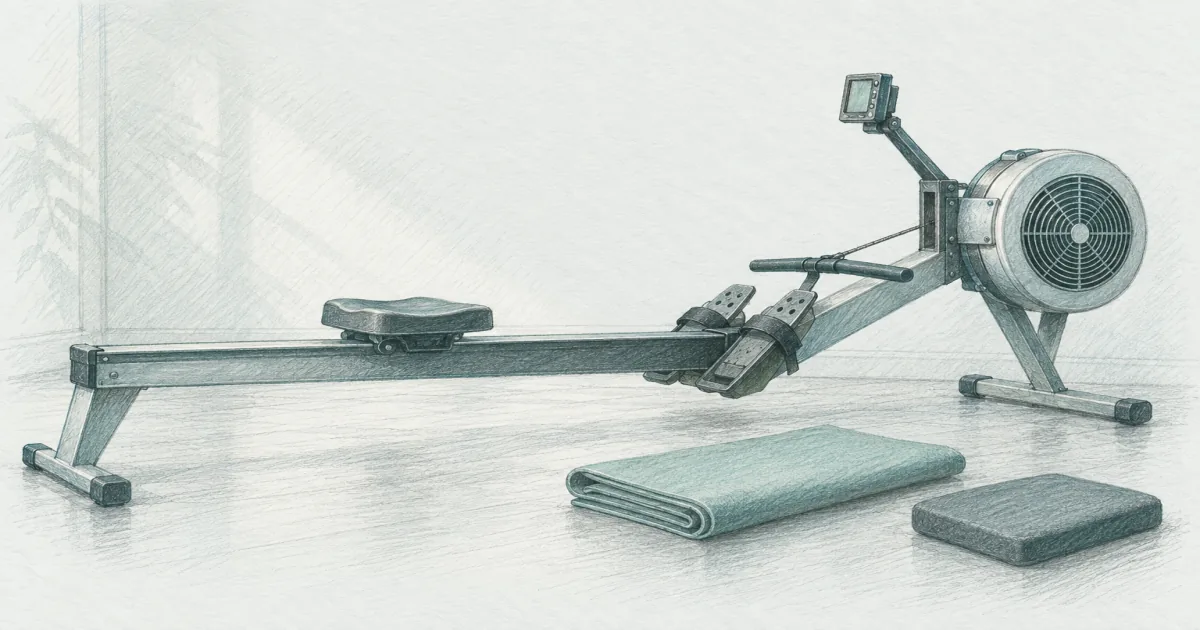
The Concept2 RowErg is the machine you will find in boathouses, CrossFit boxes, and serious home gyms, and it has held that spot for decades. The reason is the air flywheel. It does not just add resistance, it responds to how hard you pull, so the machine rewards good technique instead of masking it.
Why it earns the top spot:
- Air flywheel loads progressively, which is the closest feel to rowing on water.
- PM5 monitor tracks 500m split, watts, stroke rate, and drag factor, so your progress is legible.
- Splits into two pieces and rolls on caster wheels, so it tucks away even at 8 feet long.
- Five-year frame warranty and a deep parts network, which is why used ones hold their value.
Two things to know before you buy. The stock seat is firm, and a $20 gel pad is the most common first accessory. The damper is also widely misread as a difficulty dial, so start at 3 to 5 and leave it there. The work should come from your legs, not the setting.
The RowErg is loud compared with a magnetic rower, and it needs about 9 by 4 feet of clear floor to train. In a garage or a basement, neither is an issue. In a second-floor apartment above light sleepers, it is the reason to look at the magnetic lane instead.
Merach Q1S: the quiet pick for apartments
The Merach Q1S takes the other lane. It uses magnetic resistance, dual aluminium slide rails, and a belt instead of a chain, which makes it one of the quietest machines you can put in a shared building. It also costs about a fifth of the Concept2 and stands upright against a wall when you are done.
Why it earns the apartment spot:
- Quiet magnetic resistance and a belt drive, which keeps early morning and late night sessions neighbor-friendly.
- Dual rails and a 350 lb capacity feel more solid than most rowers at this price.
- Folds upright to a narrow footprint, so it fits a bedroom or a small corner.
- Bluetooth to the Merach app and Kinomap adds guided sessions at no extra cost.
The honest limits are real. The resistance is manual, so you reach down and turn the knob at the flywheel rather than changing it from the app. The ceiling is modest, which is fine for steady cardio and light intervals but not for a strong rower chasing a hard piece. And the seat is firm past about 40 minutes, the same as most machines in this class.
If your goal is to train hard and chase numbers, the Q1S will frustrate you. If your goal is to replace a treadmill with quiet, low-impact cardio that does not shake the floor, it does that job well.
How to set up a rower without wrecking your floor or your ceiling
- Put a mat under the machine. The rear flywheel and the front foot carry the load, and on a hardwood floor they will transmit vibration. A horse stall mat or a thick rubber gym mat under the rail protects the floor and quiets the machine.
- Measure the rowing length, not the stored length. A full-size air rower needs about 9 by 4 feet of clear space to use, even though it stores much smaller.
- Leave wall space for upright storage. The Merach Q1S stands on its nose, so leave a clear wall you do not mind losing.
- Check the ceiling if you mount anything. A phone or tablet arm on the Concept2 PM5 adds height, so clear it before you row.
- Wipe the rail and the seat rollers. Dust on the monorail is the most common cause of a gritty-feeling stroke on any rower.
Rowing form and damper basics for new rowers
Most beginners pull with their arms first, which makes rowing feel harder than it is and tires the wrong muscles. The stroke has a simple order.
- Drive. Push with your legs first, then lean your body back slightly, then pull the handle to your lower ribs.
- Recovery. Reach your arms forward, hinge your body over, then let your legs bend and slide you back to the catch.
- Pace yourself. Aim for a stroke rate around 20 to 24 per minute for steady work. Faster is not better if your form falls apart.
On the Concept2, leave the damper at 3 to 5. It controls airflow, not difficulty, and a setting of 10 mostly makes the stroke heavy and slow. On the Merach Q1S, start around level 4 to 6 and work up once your form is steady.
Who should skip a rowing machine
- You want to read or watch a show while you train. The stroke needs both hands and some attention, so a bike or a treadmill is the better fit.
- You have a sensitive lower back or shoulders. Talk to a clinician first, then learn the leg-driven stroke before you load it up.
- You want strength, not cardio. A rower builds endurance and some muscle, but a rack and bar will move the needle faster on pure strength.
- You have no floor space. A rower needs a few feet of clear floor in a line. If that does not exist, an upright magnetic rower is the only version that fits.
Bottom line
If you want a rowing machine that measures your effort and lasts for years, get the Concept2 RowErg. If you want quiet cardio that stores against a wall and costs under $200, get the Merach Q1S. The Concept2 is the better training tool, and the Merach is the better apartment neighbor. Pick the one that matches the room you actually have.
Frequently Asked Questions
Are home rowing machines worth it?
For most people who want low-impact cardio, yes. Rowing works your legs, back, and arms in one stroke, it is easier on the knees than running, and a good machine takes up about the footprint of a coffee table. The catch is that a rower only pays off if you actually use it, so buy for the space and noise level you really have.
Can I lose belly fat by rowing?
Rowing burns calories and builds muscle, but no machine can target fat on one body part. Fat loss comes from eating fewer calories than you burn over time, and rowing is a strong tool for that because it uses so much of your body at once. Pair it with strength training and a sensible diet rather than expecting the rower to do the work alone.
What is 10 minutes on a rowing machine equivalent to?
It depends on how hard you pull. A steady 10 minutes at a moderate pace burns roughly what an easy 10 to 15 minute jog burns for many people, while a hard 10 minute piece feels closer to a set of sprint intervals. The monitor gives you watts and calories, so you can compare sessions instead of guessing.
Which is better, a hydraulic or magnetic rowing machine?
Magnetic. Hydraulic rowers use pistons that give a short, choppy stroke and uneven resistance, and they tend to wear out faster. Magnetic rowers like the Merach Q1S run smooth and quiet, and the resistance holds steady across the whole pull.
Concept2 or a magnetic rower: which should I buy?
Pick the Concept2 RowErg if you want training data, a natural on-water feel, and a machine that lasts for years. Pick a magnetic rower like the Merach Q1S if you need quiet operation, a smaller budget, and a machine that stores upright against a wall. They are built for different jobs rather than competing on the same terms.
What damper setting should I use on a Concept2?
Start at 3 to 5 and leave it there for most sessions. The damper is not a difficulty dial, it changes how much air reaches the flywheel and how the stroke feels. Leaving it at 10 just makes the stroke heavy and tiring, it does not make the workout better.
How much space does a rowing machine need?
A full-size air rower like the Concept2 runs about 8 feet long and needs roughly 9 by 4 feet of clear floor to train. A compact magnetic rower like the Merach Q1S is closer to 5 and a half feet long and stands upright for storage, so check both the rowing length and the wall space you have.